Capuchins Monkey for sale in Penmaenmawr, Wales | Petzlover


Capuchins Monkey Pretty Capuchin Monkeys
Listing Type
Pet for Sale
Listing ID
:84083
Location
:Penmaenmawr, Penmaenmawr, Conwy, Wales
Published
:30+ days ago
Breeder

Listing Description
12 weeks old capuchin monkeys for adoption they are so friendly and will make your home lovely for you visitors ***
Frequently Asked Questions about Capuchins Monkeys
What are Capuchin Monkeys like as pets?
Capuchin Monkeys are known for their intelligence and playful nature. They are very social animals and can create strong bonds with their owners, making them wonderful companions.
How old are the Capuchin Monkeys for adoption?
The Capuchin Monkeys we have for adoption are 12 weeks old. This is a great age as they are still young and able to adapt easily to a new home.
Are Capuchin Monkeys friendly?
Yes, Capuchin Monkeys are known for their friendly demeanor. They enjoy interacting with people and can be very affectionate.
Where are these Capuchin Monkeys located?
The Capuchin Monkeys are located in Penmaenmawr, Conwy, Wales, United Kingdom. Prospective adopters in this area can find it convenient to meet the monkeys.
What kind of care do Capuchin Monkeys require?
Capuchin Monkeys require a lot of attention, social interaction, and a proper diet to thrive. They also need mental stimulation through toys and activities to keep them happy and healthy.
Can Capuchin Monkeys be kept with other pets?
Are Capuchin Monkeys suitable for families?
Capuchin Monkeys can be suitable for families, but they do require commitment and supervision around young children. Prospective owners should ensure that all family members understand the needs of these animals.
What should I consider before bringing a Capuchin Monkey home?
Before bringing a Capuchin Monkey home, consider their long lifespan, social needs, and the time and resources required for care. They thrive in environments where they receive plenty of attention and mental engagement.


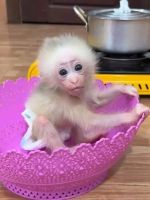
Home Raised Pigtail and Stumptail Macaque Monkeys for Adoption


Emotional Filled Pigtail and Stumptail Macaque Monkeys Available